
A child who rips off their headphones after 20 minutes because of ear pressure, headband squeezing, or heat buildup will never benefit from the noise cancellation or volume safety features those headphones were purchased to provide. Finding comfortable kids headphones for all-day wear means prioritizing physical comfort engineering—weight distribution, clamping force, ear cushion breathability, and headband padding—as the primary selection criteria above sound quality, brand, or even price. Comfortable kids’ headphones are designed with lighter materials (under 200g), reduced clamping pressure calibrated for smaller heads, breathable protein leather or fabric ear cushions, and adjustable headbands that accommodate growth without creating pressure points during extended 2–4 hour wear sessions. The comfort problem is especially critical for children because they lack adults’ tolerance for mild discomfort—a slightly too-tight headband that an adult endures for hours causes a child to reject the headphones entirely within minutes. This guide identifies exactly what makes lightweight kids’ headphones wearable for extended periods and which specific models deliver genuine all-day comfort for children’s smaller anatomy.
Why Do Most Headphones Become Uncomfortable for Kids Quickly?
Most headphones become uncomfortable for kids because they’re designed for adult head dimensions — the clamping force, ear cup size, headband arc, and weight distribution create pressure patterns optimized for adult anatomy that concentrates painfully on children’s smaller, more pressure-sensitive structures.
Comfort failure points in non-kids-specific headphones:
- Excessive clamping force: Adult headphones clamp at 3–5 Newtons to grip larger adult heads. Children’s heads are smaller — the same clamping force on a narrower head creates 30–50% more pressure per square centimeter on temporal bones and ears. This causes headaches within 15–30 minutes.
- Oversized ear cups: Adult ear cups designed for adult ears leave gaps on children’s smaller ears — reducing noise isolation while simultaneously creating awkward positioning that presses on jaw or temple rather than cupping the ear naturally.
- Headband weight concentration: Heavy headphones (250g+) concentrate gravitational force on the crown of the head. Children’s developing neck muscles fatigue faster under this load — creating discomfort that builds progressively over 30–60 minutes.
- Non-breathable materials: Synthetic leather ear cushions trap heat against the ear. Children’s higher metabolic rate and more active movement generate heat faster — creating sweaty, uncomfortable ears within 20 minutes that adults might tolerate for 60+.
- Non-adjustable fit: Fixed-size headphones that fit “most adults” fit virtually no children. Without multiple size adjustments, the headphone either slides down (loose) or squeezes (tight) — both creating discomfort through different mechanisms.
Building a great digital footprint takes a similar kind of deliberate planning. Just like choosing the right gear for your child ensures long-term comfort, knowing how to develop a strong online presence helps brands and creators build lasting authority. Ensuring your content is accessible, high-quality, and tailored directly to your audience’s daily needs is the absolute baseline for digital growth.
What Makes a Headphone Genuinely Comfortable for Extended Kids’ Wear?
Genuine extended-wear comfort requires five elements working together: weight under 200g, clamping force under 3N, memory foam ear cushions with breathable covering, padded adjustable headband, and overall dimensions sized for children’s 48–54cm head circumference rather than adult 56–62cm.
Comfort engineering breakdown:
| Comfort Factor | Ideal Spec for Kids | Why It Matters | What Happens If Wrong |
|---|---|---|---|
| Weight | Under 200g (ideally 150–175g) | Reduces neck strain and crown pressure | Headaches, neck pain after 30 min |
| Clamping force | Under 3 Newtons | Gentle pressure holds without squeezing | Temporal pain, ear compression |
| Ear cushion material | Memory foam with breathable fabric or protein leather | Conforms to ear shape, allows air circulation | Heat buildup, sweat, pressure points |
| Ear cup size | 55–65mm internal diameter (over-ear for kids) | Cups entire ear without pressing on cartilage | Ear folding, cartilage pain, poor seal |
| Headband padding | Soft foam or air-cushion with fabric covering | Distributes weight across crown comfortably | Crown pressure hotspot, headache |
| Adjustability range | Fits 48–54cm head circumference | Grows with child, always fits correctly | Slides down (too big) or squeezes (too small) |
Which Ear Cushion Materials Are Most Comfortable for Kids?
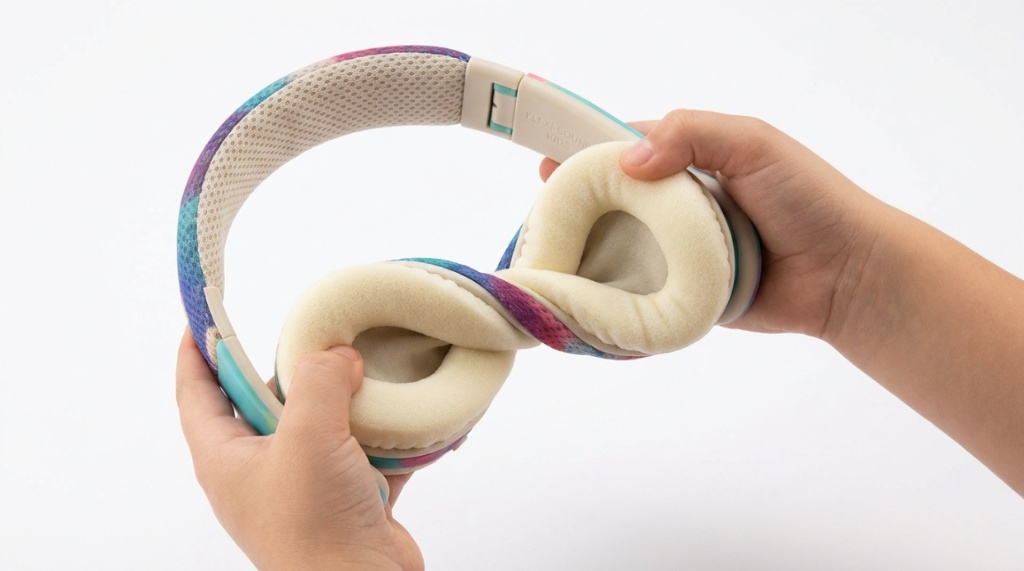
Memory foam wrapped in breathable mesh fabric provides the best extended-wear comfort for children — conforming to ear shape without creating heat buildup, while maintaining enough firmness to hold position without flattening during long study or travel sessions.
Material comparison:
- Memory foam + mesh fabric (best): Conforms to individual ear shape, distributes pressure evenly, allows air circulation that prevents sweat. Maintains comfort for 2–4 hours. Slightly less noise isolation than sealed leather — but far more comfortable for extended wear. Best for: all-day study, long flights.
- Memory foam + protein leather (good): Better noise isolation than fabric (sealed surface blocks more sound). Slightly less breathable — can cause mild heat after 60–90 minutes in warm environments. Good compromise between comfort and isolation. Best for: ANC headphones where seal quality affects cancellation effectiveness.
- Standard foam + plastic leather (adequate): Found on budget headphones. Less conforming than memory foam — creates mild pressure points over time. Acceptable for 30–60 minute sessions. Deteriorates faster (flaking leather, compressed foam losing shape). Best for: budget purchases where replacement within 1–2 years is expected.
- Velour/fabric only (comfort-focused): Extremely breathable and soft — zero heat buildup. Less noise isolation (sound leaks through fabric). Best for quiet home study environments where isolation isn’t critical but all-day comfort is priority.
Replacement consideration: all ear cushions compress and degrade over time (6–18 months depending on use frequency and material quality). Choose headphones with replaceable ear cushions rather than permanently attached ones — extending the headphone’s useful life by simply swapping cushions when comfort degrades rather than replacing the entire headphone.
How Heavy Should Kids’ Headphones Be for All-Day Comfort?
Kids’ headphones for extended wear should weigh 150–200g maximum — with the ideal range being 155–180g where adequate ANC and build quality coexist with genuinely lightweight construction that children’s neck muscles can support for hours without fatigue.
Weight impact on comfort duration:
- Under 150g (ultralight): Unlimited comfort duration. However, achieving this weight often sacrifices ANC capability, battery size, or build durability. Typically found in basic on-ear designs without noise cancellation.
- 150–180g (ideal for kids’ ANC): Comfortable for 3–4+ hours of continuous wear for most children ages 6–12. This weight range allows ANC circuitry, adequate battery, and quality ear cushions while remaining genuinely lightweight for children’s anatomy.
- 180–210g (acceptable): Comfortable for 2–3 hours. Mild neck awareness may develop beyond this duration, particularly for smaller children under 8. Acceptable for headphones offering premium ANC or build quality at slight weight premium.
- 210–250g (adult territory): Most children experience discomfort within 60–90 minutes. This weight range is typical of adult headphones being marketed for “older kids/teens” — acceptable only for children 12+ with adult-sized frames.
- Over 250g (not recommended for children): Even premium adult ANC headphones (Sony, Bose at 250–270g) create measurable discomfort for children within 30–60 minutes. Not appropriate for extended children’s use regardless of other features.
What Are the Most Comfortable Kids’ Headphones Currently Available?
The most comfortable kids’ headphones for extended wear are: BuddyPhones Cosmos+ (152g with plush padding), Puro BT2200 Plus (175g with premium cushions), and JBL JR460NC (175g with child-optimized clamping) — each specifically engineered for children’s anatomy rather than adapted from adult designs.
- BuddyPhones Cosmos+ ($60–$80): 152g ultralight. Plush padded headband with wide distribution. Soft hypoallergenic ear cushions. ANC included. Designed with children ages 4–12 specifically in mind. Foldable for travel. Parents consistently report their children forget they’re wearing them — the ultimate comfort endorsement.
- Puro BT2200 Plus ($80–$100): 175g. Premium memory foam protein leather cushions. Audiologist-designed for extended safe listening. Lightweight aluminum and plastic construction. Padded headband with wide arc that distributes weight across the crown. Excellent for 3+ hour study sessions.
- JBL JR460NC ($50–$70): 175g. Child-sized ear cups with soft cushioning. Adjusted clamping force calibrated for smaller heads. ANC with 30-hour battery (never dies mid-use). Comfortable for 2–3 hour sessions. Best value for comfort + ANC combination.
- LilGadgets Untangled Pro ($30–$45): 165g. SharePort for siblings. Soft mesh-covered cushions. Ultra-lightweight for youngest users (4–8). No ANC, but extremely comfortable for home study where noise cancellation isn’t critical.
How Do You Test Comfort Before Committing to Purchase?
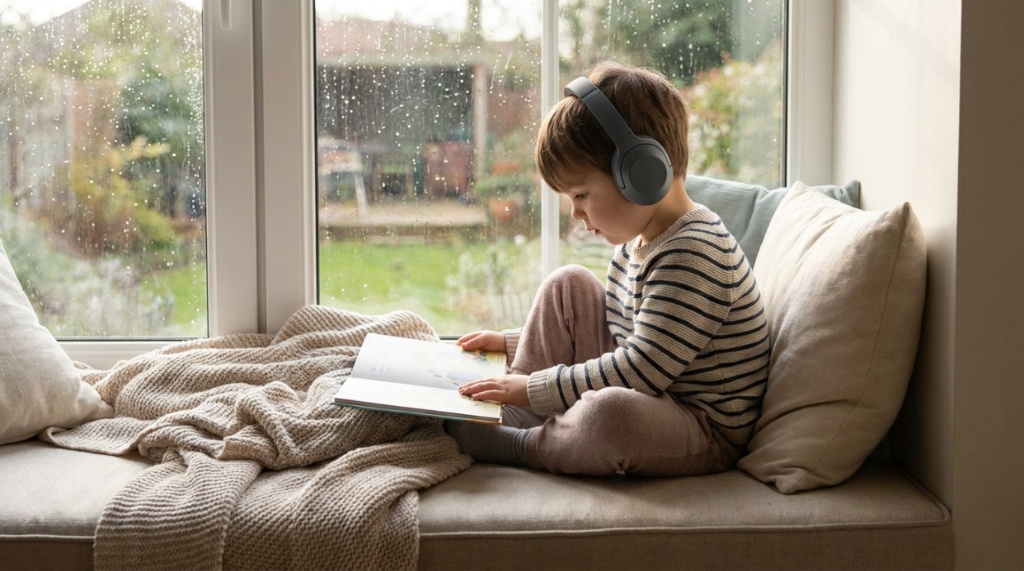
Test comfort by: having your child wear the headphones for minimum 20 minutes in-store (if possible), checking for red ear marks after removal, asking specifically about headband pressure and ear heat, and verifying the headband stays in position without sliding during normal head movement.
- 20-minute wear test: Immediate comfort means nothing — most headphones feel fine for 5 minutes. Ask your child to wear them through a full YouTube video or homework session (20+ minutes). Comfort complaints that emerge after 15 minutes predict all-day discomfort.
- Red mark test: After 20 minutes of wear, remove headphones and check for red pressure marks around the ears, on top of the head, or on the temples. Visible red marks indicate excessive pressure that will become painful during longer sessions. No marks = appropriate pressure distribution.
- Specific questioning: Children often say “they’re fine” to avoid shopping delays. Ask specifically: “Does anything feel squeezy? Are your ears hot? Does the top of your head feel heavy?” Direct questions about specific sensations get more honest responses than general “are they comfortable?”
- Movement stability: Have your child look down (reading position), turn their head side-to-side, and stand up/sit down. If headphones slide, shift, or require constant repositioning — they’ll cause friction-based discomfort during natural movement throughout study sessions.
If in-store testing isn’t possible (online purchase): choose retailers with generous return policies (30+ days). Have your child wear headphones daily for one full week before deciding to keep. Comfort issues that build over days of use reveal themselves within this trial period.
Conclusion
Comfortable kids headphones are the foundation that makes every other headphone feature usable — because a child who removes uncomfortable headphones within 20 minutes receives zero benefit from ANC, volume limiting, or audio quality regardless of how excellent those features are. Prioritize comfort engineering first: weight under 200g, child-calibrated clamping force, breathable memory foam cushions, and adjustable sizing that fits your child’s specific head dimensions today and grows with them.
Choose lightweight kids headphones designed for children’s anatomy from the start — not adult headphones downsized or recolored. Test for extended-wear comfort through 20-minute trials and post-removal skin checks. And remember that the most comfortable headphone is one your child genuinely forgets they’re wearing — that invisibility is the benchmark that separates adequate comfort from genuine all-day wearability that delivers sustained benefit across study, travel, and daily life.
Frequently Asked Questions
How long can kids safely wear headphones continuously?
From a hearing safety perspective (at 85dB or below): up to 2 hours continuously before a break is recommended. From a physical comfort perspective: quality lightweight kids headphones maintain comfort for 2–4 hours depending on model and individual child. Best practice: 45–60 minute blocks with 10-minute breaks where headphones are fully removed, allowing ears to breathe and pressure to release.
Are over-ear or on-ear headphones more comfortable for kids?
Over-ear headphones (cups surround the ear) are more comfortable for extended wear because they distribute pressure across the side of the head rather than pressing directly on the ear cartilage. On-ear headphones press against the ear itself — causing cartilage pain after 20–40 minutes for most children. For all-day use, always choose over-ear designs with adequately sized cups that fully encompass your child’s ears.
Why do my child’s headphones keep sliding off?
Sliding indicates the headphone is too large (headband not adjustable enough for their head size) or clamping force is insufficient to grip their smaller head. Solutions: adjust to the smallest headband setting, choose a kids-specific model with smaller size range, or add a headband cover with grip material that prevents sliding on smooth hair. If no adjustment helps — the headphone is designed for a larger head and should be replaced with a properly sized alternative.
Can kids wear glasses comfortably with headphones?
Yes, with the right ear cushions. Memory foam cushions that compress around glasses temples provide the best compatibility — the foam conforms around the glasses arm without creating a pressure point. Hard foam cushions create painful pressure where glasses meet the cushion. If your child wears glasses, specifically test comfort with glasses on during the 20-minute wear trial. Some brands (like Puro) specifically mention glasses compatibility in their cushion design.
How often should ear cushions be replaced for comfort?
Replace ear cushions every 6–12 months for daily-use headphones, or when you notice: visible flattening (foam no longer springs back fully), material flaking or tearing, decreased noise isolation (seal degradation), or your child reporting reduced comfort that wasn’t present when headphones were new. Replacement cushions cost $10–$25 for most models — far cheaper than replacing the entire headphone.
What’s the most comfortable headphone material for sensitive kids’ skin?
Hypoallergenic fabric-covered memory foam is safest for sensitive skin. Protein leather (synthetic) occasionally causes irritation in children with latex or synthetic material sensitivity. If your child has known skin sensitivities, choose headphones specifically marketed as hypoallergenic with fabric (mesh or velour) cushion covers rather than synthetic leather. BuddyPhones and LilGadgets both emphasize hypoallergenic materials in their children’s lines.