
You’re boarding a 4-hour flight with your 6-year-old. The engine roars, the cabin buzzes with chatter, and your child is already overwhelmed, tugging at your sleeve with teary eyes. Sound familiar?
The constant noise during travel — whether it’s airplane engines, highway traffic, or train rumbles — doesn’t just annoy kids. It can cause genuine stress, disrupt sleep, and make the entire trip miserable for everyone. For children with sensory sensitivities, it’s even worse.
The solution? A quality pair of kids travel headphones with active noise cancellation. These aren’t just miniature adult headphones — they’re specifically designed to protect young ears while blocking out the chaos of travel. In this guide, we’ll break down exactly how effective they are, what to look for, and which options deliver the best results without breaking the bank.
Why Do Kids Need Noise Cancelling Headphones for Travel?
Children’s ears are more sensitive than adults’. The World Health Organization recommends that children should not be exposed to sounds above 85 decibels for extended periods. An airplane cabin typically reaches 80-100 dB during takeoff and cruising. Car interiors on highways average 70-80 dB, and trains can hit 90 dB in tunnels.
Without protection, prolonged exposure to these noise levels can lead to temporary hearing threshold shifts, increased cortisol levels (stress), difficulty sleeping, and general irritability. Noise cancelling headphones reduce ambient noise by 20-35 dB depending on the technology, bringing levels well within the safe zone.
Beyond hearing protection, these headphones help kids focus on audiobooks, movies, or music during long trips — keeping them calm and entertained while parents get a much-needed break.
How Do Noise Cancelling Headphones Actually Work for Kids?
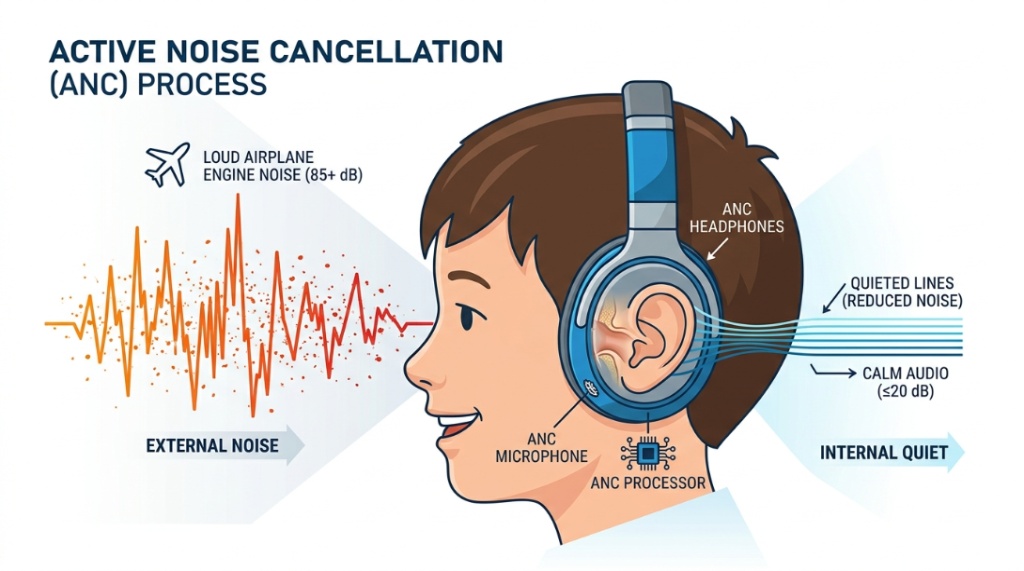
Active Noise Cancellation (ANC) uses tiny microphones built into the ear cups to pick up external sounds. A processor then generates an “anti-noise” sound wave — the exact opposite frequency — that cancels out the incoming noise. The result? Significantly reduced background noise without needing to crank up the volume.
For airplane headphones for kids, this technology is particularly effective against low-frequency, constant sounds like engine drone. It’s less effective against sudden, sharp noises (like a baby crying or an announcement), but it still reduces overall noise fatigue dramatically.
Passive noise isolation (the physical seal of the ear cups) adds another 5-10 dB of reduction on top of ANC. Together, kids experience a quieter, calmer environment that makes travel significantly more bearable.
ANC vs. Passive Isolation: What’s the Difference?
Passive noise isolation relies entirely on the physical design — padded ear cups that create a seal around the ear. It’s effective for mid-to-high frequency sounds but does little against low rumbles. ANC actively fights those low frequencies electronically. The best kids travel headphones combine both for maximum effectiveness.
What Should Parents Look for in Kids Travel Headphones?
Not all headphones are created equal, especially for children. Here are the critical factors to consider when choosing airplane headphones for kids:
- Volume Limiting (85 dB cap): This is non-negotiable. Kids will turn up the volume if they can. A built-in limiter ensures they can’t accidentally damage their hearing, even when ANC is active.
- Comfort for Extended Wear: Travel means hours of use. Look for lightweight designs (under 200g), plush ear cushions with memory foam, and adjustable headbands that won’t pinch.
- Battery Life: ANC requires power. For long-haul flights, you need at least 20 hours of battery life. Some headphones still work passively when the battery dies — a huge plus.
- Durability: Kids are rough on gear. Foldable designs with reinforced hinges and flexible headbands survive backpack stuffing and accidental drops.
- Size/Fit: Too large and they slide off; too small and they squeeze. Look for headphones designed for ages 3-7 or 7-12, depending on your child’s head size.
How Effective Are They on Airplanes vs. Cars vs. Trains?
The effectiveness of kids travel headphones varies by environment. Here’s a realistic breakdown:
Airplanes: This is where ANC shines brightest. Engine noise is predominantly low-frequency and constant — exactly what ANC is designed to cancel. Expect 25-35 dB reduction, making the cabin feel like a quiet library. Most kids can sleep comfortably or watch content at low volumes.
Cars: Road noise is a mix of low-frequency tire hum and mid-frequency wind noise. ANC handles the tire hum well (20-25 dB reduction) but wind noise less so. Still, a noticeable improvement — especially on long highway drives.
Trains: Similar to airplanes for constant rail noise, but tunnels create sudden pressure changes and loud bursts. ANC reduces the constant rumble effectively (22-30 dB) but those tunnel blasts still come through partially.
Which Kids Travel Headphones Offer the Best Value?
We’ve compared five popular options that balance noise cancellation effectiveness, comfort, safety, and price for traveling families:
| Headphone Model | ANC Level | Volume Limit | Battery Life | Weight | Price Range |
|---|---|---|---|---|---|
| JBL Jr 460NC | Active (Good) | 85 dB | 30 hours | 155g | $45-55 |
| Puro PuroQuiet Plus | Active (Excellent) | 85 dB | 35 hours | 180g | $80-100 |
| BuddyPhones Cosmos+ | Active (Good) | 75/85/94 dB modes | 26 hours | 195g | $70-90 |
| LilGadgets Untangled Pro | Passive Only | 93 dB | 12 hours (BT) | 175g | $35-45 |
| iClever BTH12 | Active (Moderate) | 85 dB | 45 hours | 165g | $30-40 |
For frequent flyers, the Puro PuroQuiet Plus delivers the best ANC performance with hearing protection built in. For budget-conscious families, the iClever BTH12 offers surprisingly decent noise cancellation at a fraction of the price — and that 45-hour battery life means you’ll almost never run out mid-trip.
Are Noise Cancelling Headphones Safe for Children’s Ears?
This is the most common concern parents have — and rightfully so. The short answer: yes, when designed properly for kids.
ANC itself doesn’t produce harmful sound. It generates anti-noise waves at very low power levels that simply cancel incoming noise. The real safety feature is the volume limiter. With a proper 85 dB cap, even if a child maxes out the volume, their exposure stays within WHO-recommended safe limits.
Some audiologists actually recommend noise cancelling headphones for kids during travel because they reduce the temptation to crank up volume to compete with ambient noise. Without ANC, a child might push volume to 95-100 dB to hear their movie over airplane engines. With ANC, they comfortably listen at 60-70 dB.
Tips for Safe Use During Travel
- Take 10-minute breaks every hour of continuous use
- Check that the volume limiter is functioning (some can be bypassed via aux cable)
- Ensure ear cups aren’t pressing too tightly — circulation matters
- Clean ear pads regularly to prevent bacteria buildup on long trips
How Can Parents Maximize the Effectiveness of Kids Travel Headphones?
Getting the most out of your child’s headphones during travel goes beyond just putting them on:
Proper Fit: An improper seal kills ANC effectiveness. Make sure the ear cups fully surround your child’s ears without gaps. Adjust the headband so it sits snugly but not tightly on top of the head.
Combine with Content: ANC works best when paired with something to listen to. The combination of reduced background noise plus engaging content (audiobooks, calming music, or a favorite show) creates a cocoon of calm that keeps kids settled for hours.
Pre-Trip Practice: Don’t introduce headphones for the first time at the airport gate. Let your child wear them at home for short sessions first. This builds familiarity and comfort, so when travel day arrives, they’re happy to put them on.
Charge Ahead: Nothing’s worse than dead headphones mid-flight. Charge fully the night before, and consider carrying a short USB cable for emergency top-ups via seat-back USB ports or a portable battery pack.
If you’re looking to make your purchase decision easier, check out this comprehensive guide on noise cancelling headphones for kids that covers options available for different budgets and needs.
What About Budget-Friendly Options — Do They Actually Work?
Absolutely. While premium options (Puro, Sony) deliver top-tier ANC, budget-friendly airplane headphones for kids have improved dramatically in 2025-2026. Models in the $30-50 range now offer decent active noise cancellation that handles airplane engine noise effectively.
The trade-offs at lower price points are typically: slightly less effective ANC (20-25 dB vs. 30-35 dB reduction), less premium materials (thinner padding), and shorter product lifespan. But for families who fly a few times a year, a $35 pair with decent ANC is far better than no protection at all.
Key budget-friendly features to prioritize: volume limiting first, ANC second, comfort third. If you can only afford passive isolation, that still provides meaningful protection — just not as dramatic in loud environments.
Do Noise Cancelling Headphones Help Kids Sleep During Flights?
For many parents, this is the real question. And the answer is a resounding yes — with caveats.
ANC reduces the constant engine drone that keeps kids (and adults) subconsciously alert. By removing that stimulus, the brain can relax and transition to sleep more easily. Combined with a comfortable, lightweight design that doesn’t press uncomfortably against the pillow or headrest, good ANC headphones can turn a restless child into a sleeping one.
The caveat: headphones alone aren’t a sleep solution. Combine them with other strategies — a familiar blanket, a dim eye mask for older kids, a calming audiobook or white noise playlist, and a pre-flight routine that signals “sleep time.” The headphones become one powerful tool in your travel sleep toolkit.
Finding the right tech balance for younger family members during long transits can be tricky, but clever hardware setups aren’t just for flights. In fact, budget-friendly tech innovation is happening right at home; look at How Houston, TX College Students Are Building Cheap Home VR Setups to see how older students are creatively modifying consumer hardware without breaking the bank. Understanding how these different devices affect or protect developing senses is key to choosing the right gear for your household.
Real Parent Experiences: What Do Families Say?
Across parenting forums and review platforms, the consensus is clear: noise cancelling headphones are among the top 3 most-recommended travel items for families with young children. Parents consistently report:
- Kids falling asleep faster on flights (20-30 minutes vs. over an hour without)
- Significantly less anxiety and overwhelm in airports and on boarding
- Longer stretches of independent entertainment (2-3 hours vs. 45 minutes)
- Reduced in-flight tantrums and sensory meltdowns
- Parents getting their own rest or reading time
The most common complaint? Not buying them sooner. The second most common? Kids who refuse to take them off even after landing.
FAQ
At what age can kids start using noise cancelling headphones for travel?
Most manufacturers design kids’ ANC headphones for ages 3 and up. For toddlers under 3, passive noise-reducing earmuffs (not headphones) are a safer choice since they don’t require a battery and have simpler, more secure fits for very small heads.
Can noise cancelling headphones damage children’s hearing?
No — when equipped with a proper volume limiter (85 dB or lower). ANC itself produces no harmful sound. The danger comes from excessive volume, which a quality pair of kids travel headphones prevents with hardware-level limiting.
Do airplane headphones for kids work without playing music?
Yes. You can activate ANC without playing any audio. Many parents use this feature during takeoff, landing, and sleep time — the noise cancellation alone creates a noticeably quieter environment that reduces stress and helps kids relax.
How long do batteries last on kids’ noise cancelling headphones?
Modern kids’ ANC headphones typically offer 20-45 hours of battery life. For most family trips (even international flights), a single full charge is more than enough. Some models also function as passive headphones when the battery runs out.
Are wired or wireless kids travel headphones better for flights?
Wireless (Bluetooth) is more convenient — no tangled cords. However, some in-flight entertainment systems require a wired connection. The best option: wireless headphones that include a detachable aux cable for versatility on any airline.
Will my child’s headphones work with the airplane entertainment system?
If they have a 3.5mm aux cable option, yes. Some airlines still use dual-prong adapters, so consider packing a cheap dual-to-single prong adapter. Bluetooth connectivity to seatback screens is rarely available on most airlines as of 2026.
How do I clean kids headphones after travel?
Wipe ear pads with a slightly damp cloth and mild soap after each trip. For deeper cleaning, remove replaceable pads and let them air dry. Never submerge electronics. Store in a hard case between trips to prevent dust buildup and crushing.
Key Takeaways
- ✅ Kids travel headphones with ANC reduce harmful noise by 20-35 dB, protecting sensitive ears during flights, car rides, and train journeys
- ✅ Volume limiting (85 dB) is the most important safety feature — more critical than ANC quality
- ✅ Budget options ($30-50) provide meaningful noise reduction; premium isn’t always necessary
- ✅ Proper fit and pre-trip practice dramatically improve effectiveness and child acceptance
- ✅ ANC headphones help kids sleep, focus, and stay calm — reducing travel stress for the whole family